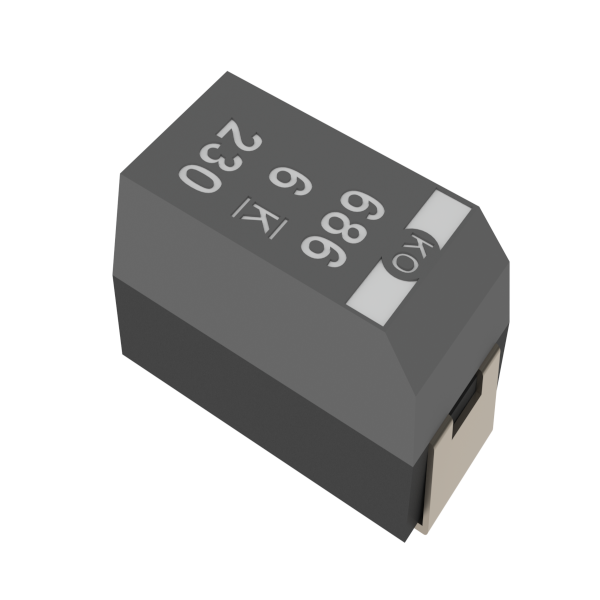

KEMET CorporationT525B686M006ATE080Tantal-Polymer-Kondensatoren
Cap Tant Polymer 68uF 6.3VDC B CASE 20%( 3.5 X 2.8 X 1.9mm) Inward L SMD 3528-21 0.08 Ohm 125°C T/R
KEMET is the market leader in KO-CAP Tantalum SMD Polymer Capacitors which offer large number of technical advantages. During the last 25 years the adoption and extensive use in application has expanded from consumer electronics applications, conquer harsh environmental automotive applications and find usage in aerospace high reliability launchings. KEMET will continue to lead the technology and will continue to bring new solutions to engineers.
The KEMET Organic Capacitor (KO-CAP) is a solid electrolytic capacitor with a conductive polymer cathode capable of delivering very low ESR and improved capacitance retention at high frequencies. KO-CAP combines the low ESR of multilayer ceramic, the high capacitance of aluminum electrolytic, and the volumetric efficiency of tantalum into a single surface mount package. Unlike liquid electrolyte-based capacitors, KO-CAP has a very long operational life and high ripple current capabilities. These devices offer full AEC-Q200 qualification and allow automotive segment designers to take advantage of the polymer technology.

| Compliant | |
| EAR99 | |
| Active | |
| 8532.21.00.50 | |
| Automotive | No |
| PPAP | No |
| Polymer | |
| 68uF | |
| 20% | |
| 6.3VDC | |
| 0.08 | |
| Very Low | |
| 1.3 | |
| 42.84 | |
| Polar | |
| 8 | |
| High Frequency|High Ripple Handling|Low ESR | |
| No | |
| Yes | |
| B | |
| Molded | |
| Flat | |
| Surface Mount | |
| Inward L | |
| 2 | |
| 3.5 X 2.8 X 1.9 | |
| 3528-21 | |
| 105 to 125 | |
| -55 | |
| 125 | |
| Tape and Reel | |
| 3.5 | |
| 2.8 | |
| 1.9 | |
| 0.095 |
| EDA / CAD Models |
KI-Systeme in der Medizin
Design-Tipps, empfohlene Komponenten und KI-Insights für bessere Diagnose- und Therapiegeräte – im aktuellen Whitepaper.